Atlantis Equipment Corporation
Design & Manufacturing Support
During my time at Atlantis Equipment, I supported both client and site side design and manufacturing. My position allowed me the privilege of working alongside talented engineers and machinists, allowing me to learn and further my understanding of production at scale. Based on what I observed on the shop floor, I proposed and implemented lean improvements targeting flow and downtime. I streamlined inventory so operators no longer had to hunt for stock, and I designed custom fixtures that let parts be run without re-indicating each time. I felt a great deal of pride working with the team to produce high quality parts for our clients while improving on our strategies for efficient manufacturing. Below, you’ll find a few key projects from my time at Atlantis.
Giddings & Lewis Horizontal Boring Mill Installation
One of my first projects was helping the maintenance team install and commission a Giddings & Lewis horizontal boring mill, including its 12-foot-deep foundation pit. My focus was alignment across nearly 50 feet of travel. We first leveled the work surface with precision machinist levels to create a reference plane. I then mounted a dial indicator on the spindle and took 26 readings in a grid across the surface, mapping where the machine’s travel deviated from the reference. Those deviations revealed warp in the rails the machine runs on, with an initial error of 0.020-0.030". Using the map, we shimmed and tightened the bolts anchoring the rails to the foundation. Over roughly three days of measuring, adjusting, and re-measuring, we brought the travel to within spec along the work surfaces full length. The mill has been cutting production parts ever since.
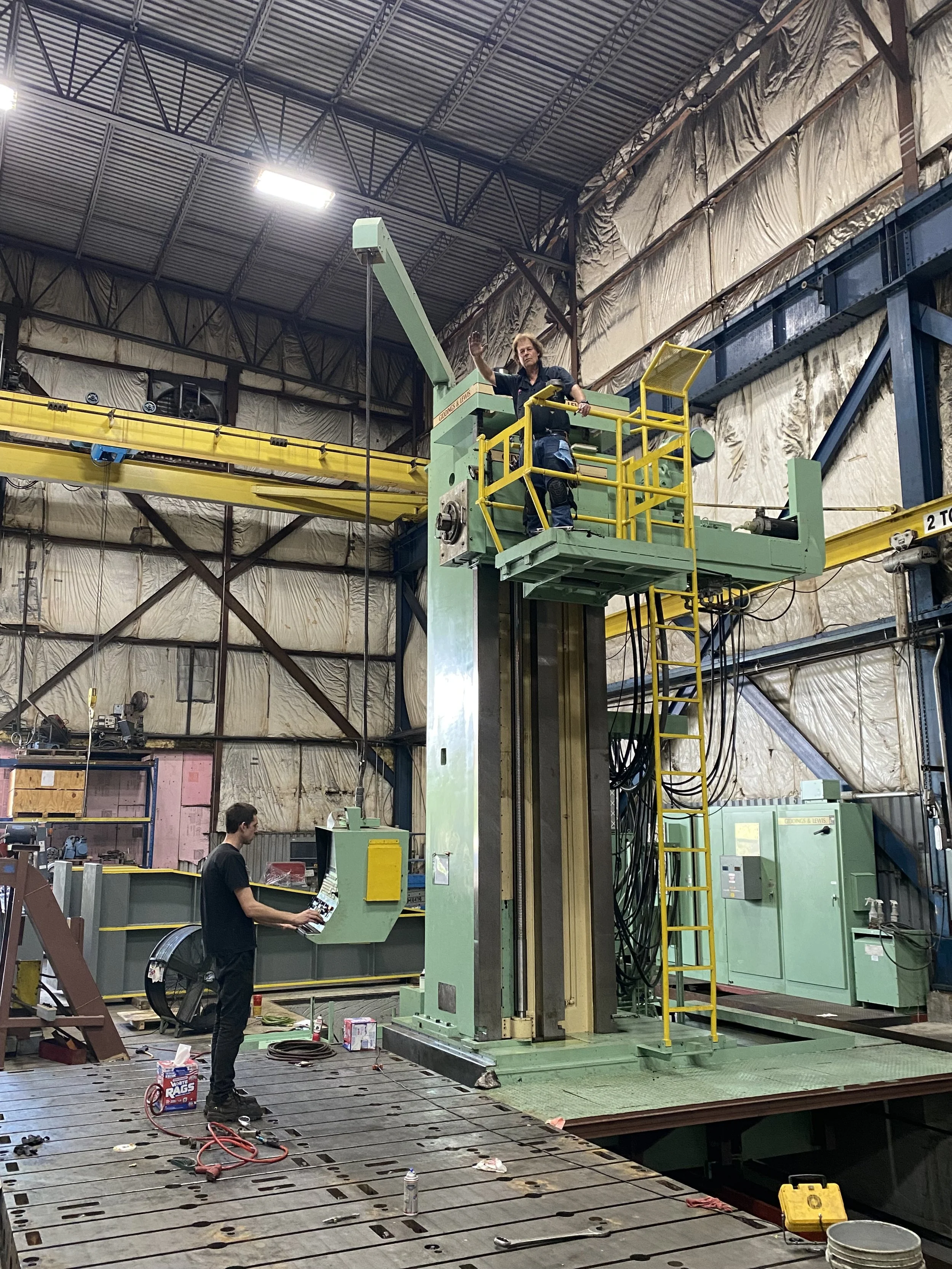
Preliminary testing of spindle rotation, z, and x axis travel on the Giddings and Lewis Horizontal Boring Mill during installation.
Pneumatic Clamping Assembly: Prototype to Production
We received the prototype from the client, and our team turned it into a production run of four finished assemblies. I facilitated the digital and process side of this job. I modeled the system in fusion 360, built the BOM and cut list, wrote the CNC tool paths for the machined parts, and assembled comprehensive production plans to ensure the repeatability and clarity of the production run.
The assemblies required 28 aluminum clamping blocks. Because the same part needed to be repeated many times, I designed and built custom fixturing so that each block could be loaded and ran without re-indicating. I wrote the code and ran the machining on the fixturing, verified tolerances, and then handed off the process to an operator.
The workflow was the biggest success. Every piece of stock followed a documented route from arrival to assembly to shipping, so anyone on the team could pick up the plan, see where the project stood, and know the next step. I worked on the project from the first client meeting through shipping, and we delivered two days ahead of schedule.
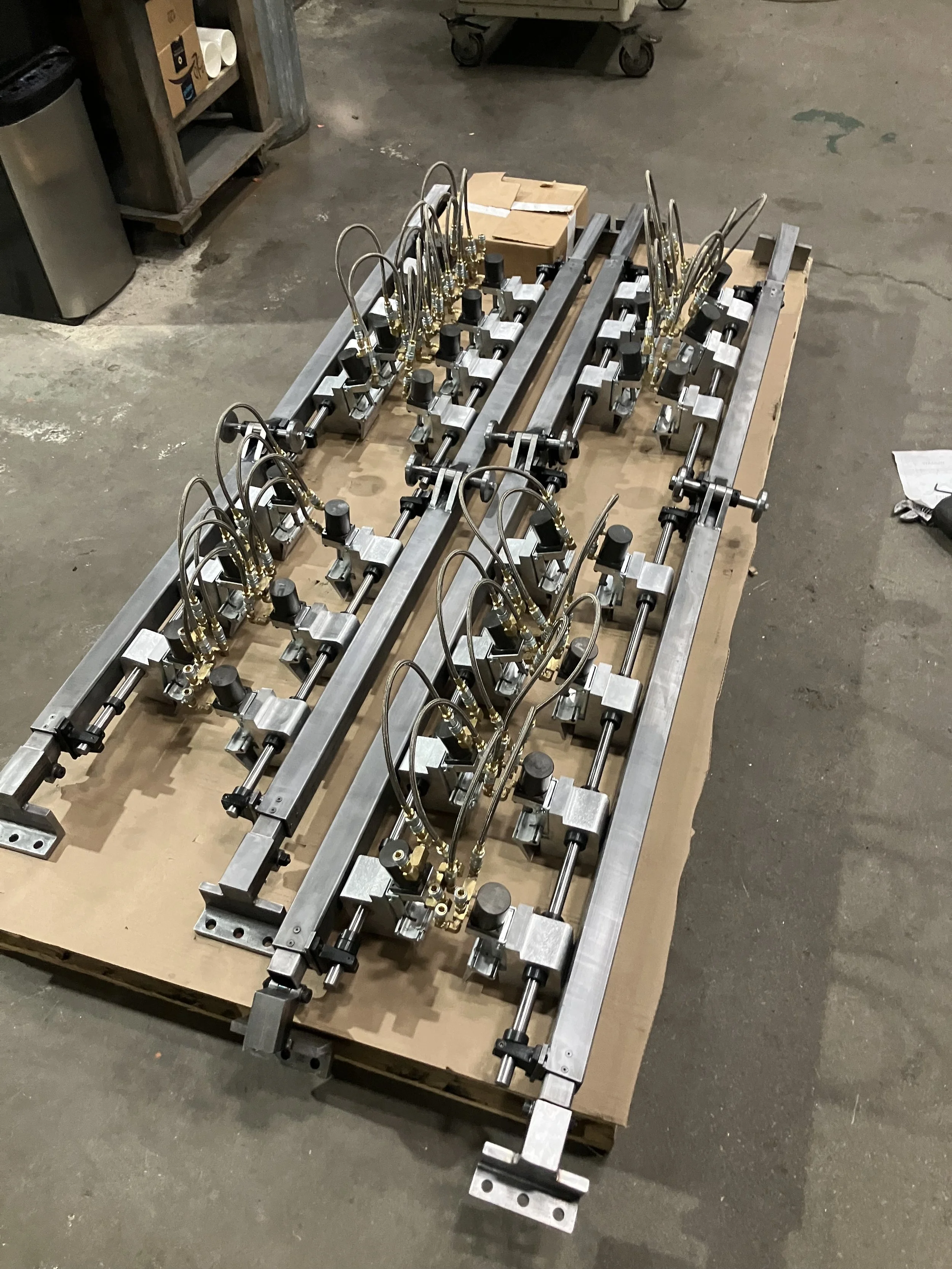
Finished assemblies being prepared for shipping

Mechanical Engineering Intern
Precision Assembly Manufacturing
At Mechanical Advantage, I was one of three interns manufacturing ten units of a 12-part assembly from shop-supplied drawings and CAD files. The assembly was built to speed up one step of the shop’s production process, and it relied on interference fits, over-center mechanisms, and material tension to hold together under strain and repeated motion.
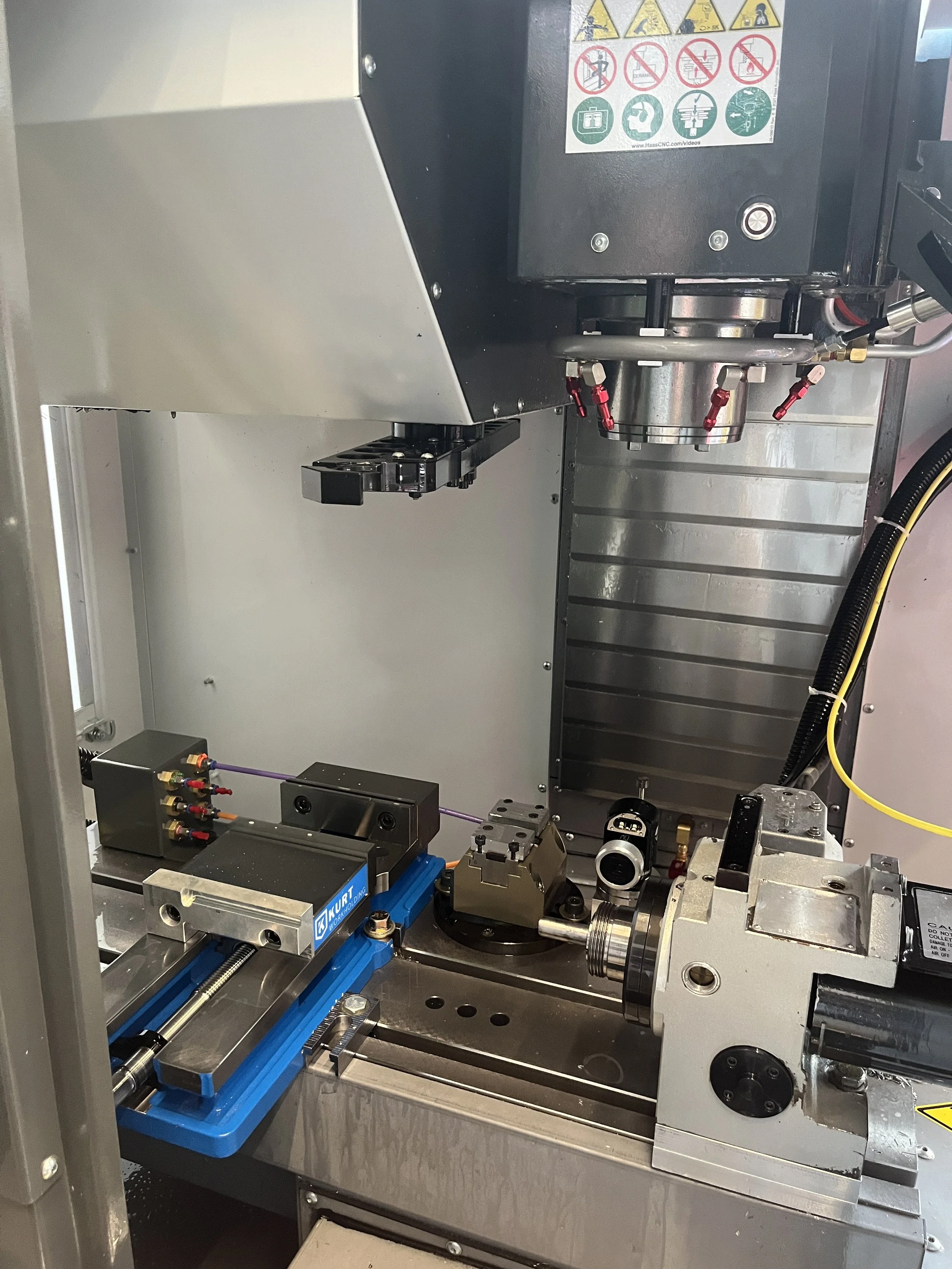
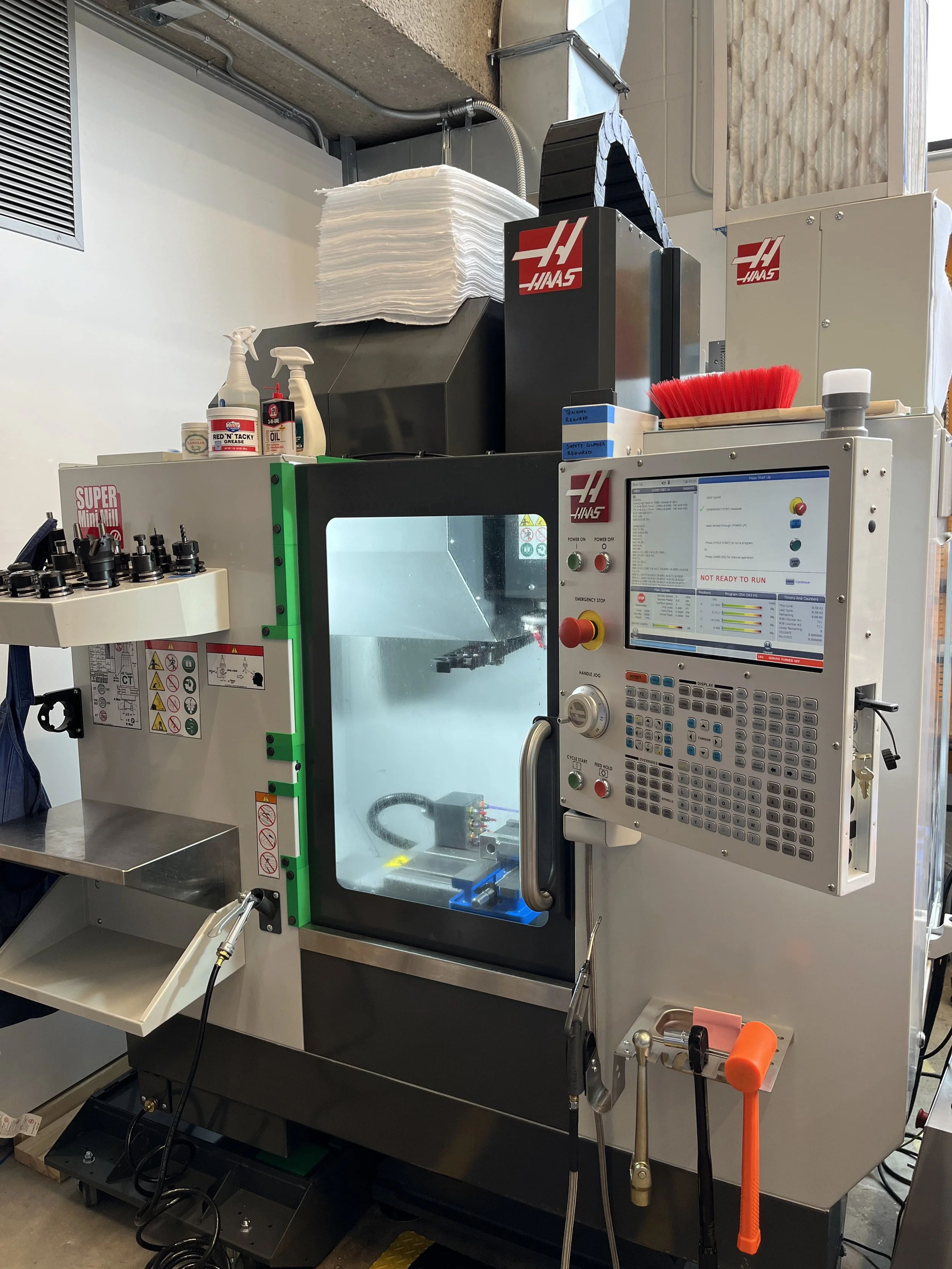
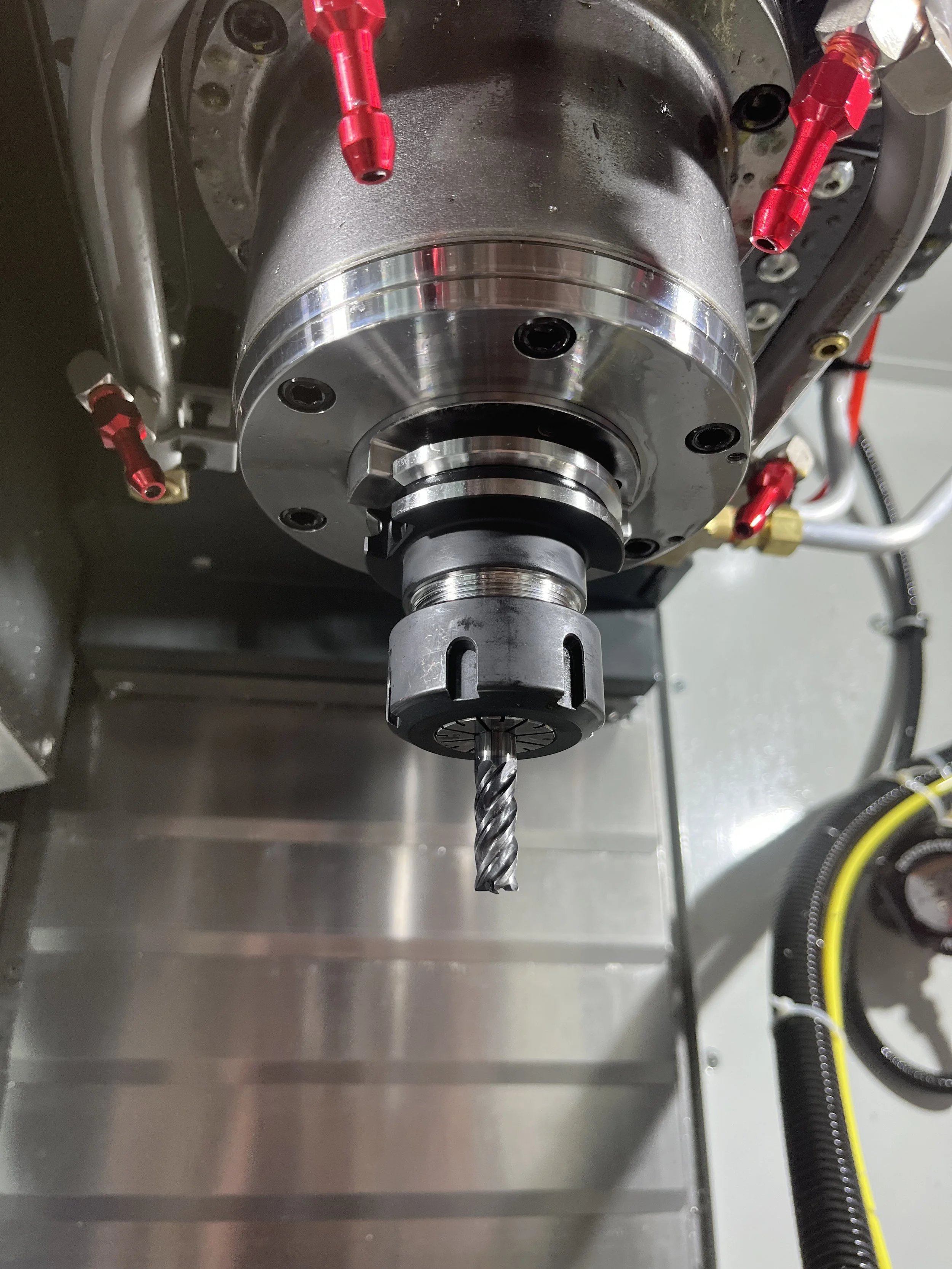
I partnered with a fellow intern to program the toolpaths and machine the assembly, researching machining methods together and reviewing each other’s code before every run. The assembly’s structural integrity depended on a steel-on-steel press fit for a 1/8" pin. We reamed the mating hole to 0.1248", which gave 0.0003-0.0005" of interference across the pin’s tolerance range, and verified each hole with pin gauges before assembly. Some components needed to be produced 40 times (four per assembly), so we focused on automation and custom fixturing to reduce operator time while maintaining precision. My partner wrote a bar-pull program for a Haas Super Mini Mill, which fed the machine its own stock from a fourth-axis bar puller. I designed the fixture and wrote a probing procedure for the second operation, so each part located itself and needed no manual indicating. After vetting the code together, the operator only needed to load stock and press run.
After the assemblies were complete, we observed the operator on this procedure and saw a significant reduction in operator time.